Smoke Damage Restoration and Air Quality: What You Didn’t Know Could Hurt You
Wiki Article
Vital Steps to Adhere To for Efficient Water Damage Reconstruction in your house
When faced with water damages in your house, knowing the important steps for effective remediation can make all the distinction. You require to examine the damages and warranty safety prior to taking on the issue. Stopping the source of water is important, however it's simply the start. When you have actually taken care of that, there's a series of actions you should require to secure your property from additional issues. Allow's explore what you need to do following.Examine the Damage
When you discover water damages in your house, the primary step is to examine the damage thoroughly. Start by identifying the resource of the water intrusion. Look for leaks, ruptured pipes, or other problems creating the issue. Next, analyze the affected areas for visible signs of damages, including bending, mold and mildew, or discoloration development. Do not forget to look in concealed places like behind walls or under flooring, as water can leak right into these locations unnoticed.Document the damage by taking clear pictures and notes. This will certainly assist you when going over the situation with your insurance provider or remediation experts. Pay interest to the kind of products influenced, as different products require different reconstruction techniques. Lastly, assess the extent of the damages. Is it small or comprehensive? Recognizing the extent will assist you in deciding whether to manage it on your own or call the professionals for an extra extensive remediation process.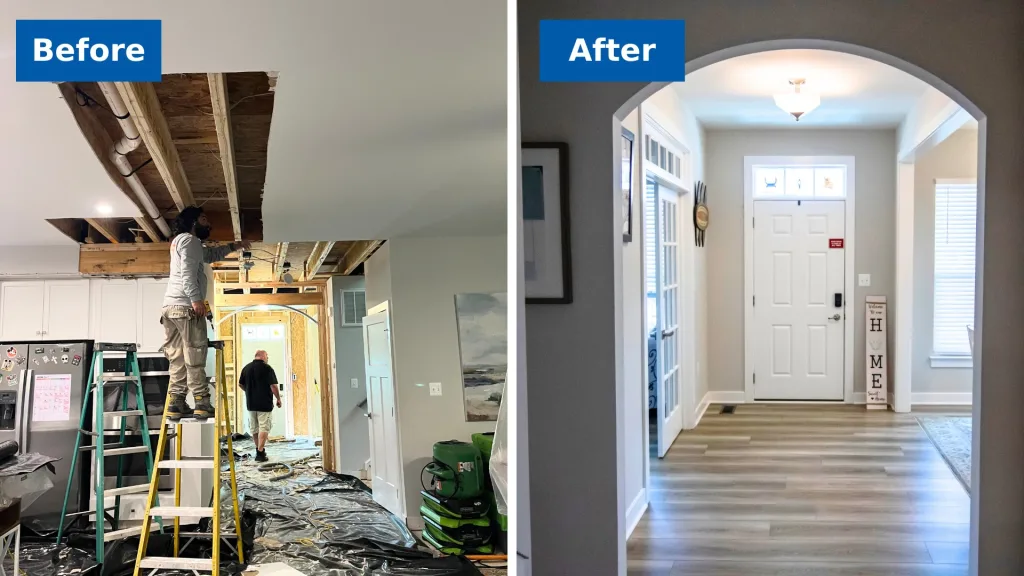
Ensure Safety
Before you start any restoration work, guaranteeing your safety is necessary. Assess the problem of your home. If the water's deep or if you observe electric dangers, don't enter the location. Shut off the power and gas supply to stop crashes. Put on protective equipment like masks, boots, and gloves to protect on your own from impurities or mold.It's essential to stay knowledgeable about your surroundings; look for sharp objects and slippery surface areas. If the water is from a sewer backup, treat it as harmful waste. Maintain children and animals far from influenced locations to avoid exposure.Once you've taken these preventative measures, you can wage the reconstruction process. Keep in mind, your safety precedes, and if you're ever not sure, it's ideal to seek advice from an expert. Taking these actions will certainly assist guarantee you prepare to take on the repair securely and effectively.Quit the Resource of Water
After ensuring your safety and security, the next step is to quit the resource of water. Determine where the leak is originating from. It might be a ruptured pipe, a malfunctioning device, or perhaps hefty rainwater entering via a harmed roof covering. If it's a pipes concern, shut off the major water to your home to avoid further flooding. For home appliances, disconnect them and turn off their water supply valves.If the resource is outside, like rain, attempt to divert it away from your home using sandbags or various other obstacles. For minor leakages, you may be able to make use of tape or a sealant briefly up until an expert can fix it. Remember, dealing with the source quickly is important to lessening damages and preventing mold and mildew development. As soon as you have actually stopped the water, you'll be in a far better position to move on to the next action in the restoration process.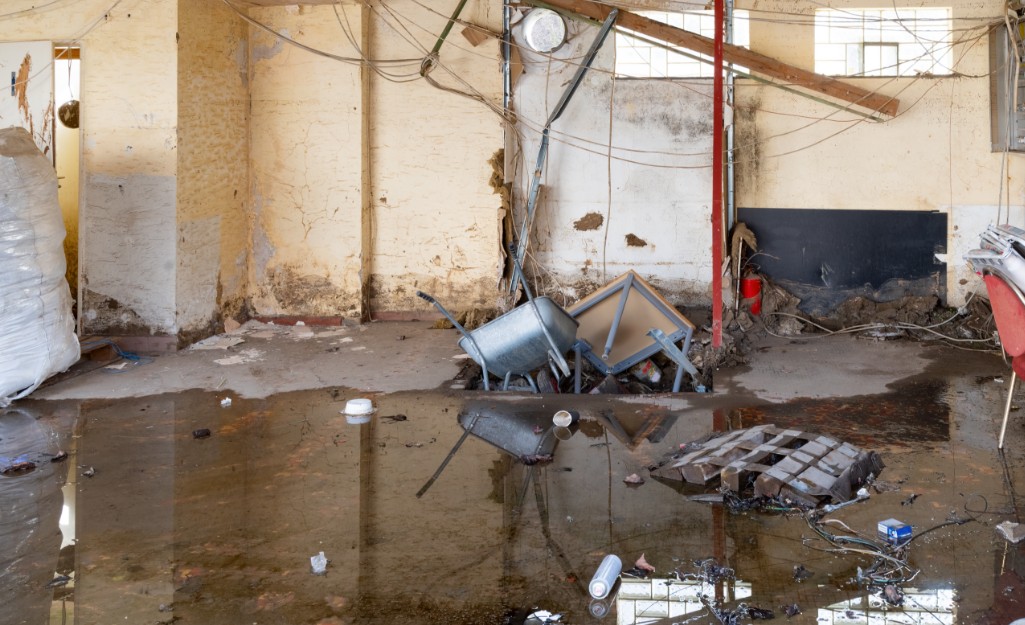
Get Rid Of Excess Water
Act promptly to eliminate excess water, as standing water can lead to more substantial damage and mold and mildew growth. First, gather your devices: a wet/dry vacuum cleaner, containers, and towels. If the water is shallow, you can make use of towels to take in the wetness. For deeper water, a wet/dry vacuum cleaner is your best option. See to it to empty the vacuum regularly to avoid overflow.If the water is infected, like from a sewer backup, wear safety gear, consisting of gloves and masks, to keep yourself safe. When you've eliminated as much water as possible, look for covert pockets of wetness in corners and under furniture, as these can harbor mold.Don' t neglect to shut off electric home appliances and power electrical outlets in damp areas to avoid threats. This first action is necessary in lessening damages and setting the phase for a successful reconstruction process.Dry and Dehumidify the Area
When you have actually eliminated the excess water, it's important to dry and dehumidify the location extensively. Beginning by utilizing dehumidifiers successfully to draw dampness out of the air and protect against mold and mildew development. Watch on moisture degrees to guarantee the space dries out entirely.Get Rid Of Standing Water
To properly tackle water damage, you need to concentrate on eliminating standing water as quickly as feasible. Beginning by gathering essential devices, like a wet/dry vacuum or a pump, depending on the volume of water. If the water is superficial, a vacuum should suffice. For larger amounts, a pump is much more efficient. While working, ensure to use protective equipment to keep yourself secure from pollutants. As you eliminate the water, focus on concealed areas like under furnishings or in corners where water could accumulate. As soon as you have actually removed the bulk, your area will start to dry out. This step is crucial, as remaining water can result in mold growth and a lot more considerable damage.Use Dehumidifiers Properly
Exactly how can you efficiently utilize dehumidifiers to dry and evaporate your room? Beginning by placing your dehumidifier in the most affected location, preferably where water damage is most severe. Ensure to close all doors and windows to produce a closed setting. Activate the dehumidifier and set it to the appropriate moisture degree, typically around 30-50%. Vacant the water collection container often, or take into consideration using a model with a continuous drainage alternative for ease. Preferably, make use of followers to improve air movement, assisting the dehumidifier job much more successfully. Keep the dehumidifier running up until you're confident that the area is thoroughly dried, stopping mold growth and additional damage (Water Damage Cleanup). This action is necessary for reliable water damages remediationMonitor Moisture Levels
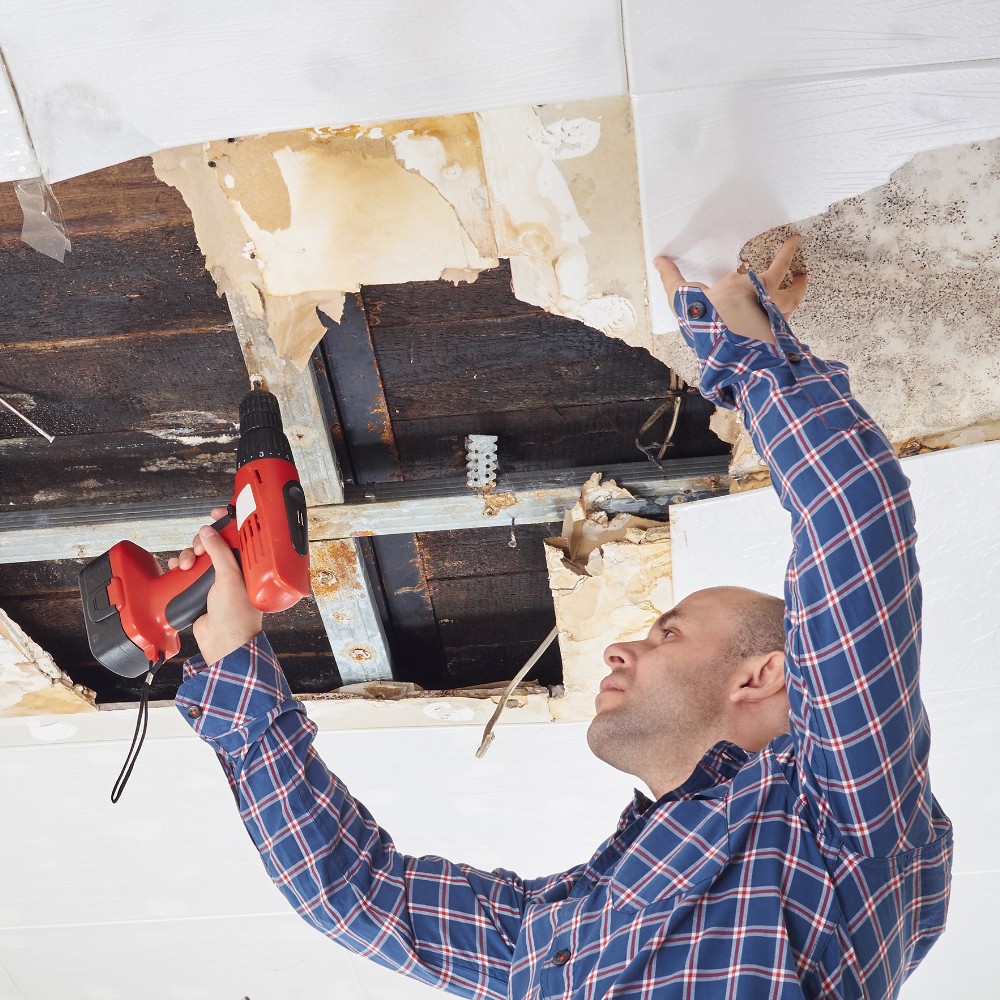
Tracking moisture levels is essential during the drying out procedure, as it assists assure your room stays without excess dampness. Purchase a dependable hygrometer to track humidity properly. Ideally, you wish to preserve degrees between 30% and 50%. If humidity readings increase over this variety, you may require to readjust your followers or dehumidifiers to boost airflow. Inspect the analyses on a regular basis, specifically in areas prone to wetness, like basements or restrooms. Think about enhancing air flow or using additional dehumidifiers if you observe consistent high moisture. Remaining on top of these levels not only quickens the drying process however also avoids mold growth, ensuring your home keeps secure and comfy.Clean and Disinfect Affected Surfaces
Recover and Repair Your Home
After cleansing and sanitizing the impacted areas, it's time to recover and repair your home. Begin by examining the damage. Inspect for structural concerns, like weakened floorings or wall surfaces, and deal with any kind of required repair services. Replacing damaged drywall or flooring is essential for both aesthetics and safety.If your furnishings or valuables were impacted, think about whether they can be recovered or require replacement. Clean or properly recover products where possible.Next, touch and repaint walls up any kind of areas that need attention. This not just boosts look yet additionally protects surfaces from future water damage.Don' t neglect to examine your pipes and appliances for leaks, making sure every little thing's functioning effectively. Lastly, think about installing a dehumidifier to avoid future wetness issues. By taking these steps, you'll restore your home to its previous splendor and produce a more secure living atmosphere.Frequently Asked Questions
Just How Lengthy Does Water Damage Restoration Usually Take?
Water damage restoration normally takes anywhere from a few days to a number of weeks, relying on the level of the damage (Water Damage Cleanup). You'll intend to assess the circumstance promptly to decrease additional problems and ensure proper restorationWill My Insurance Coverage Cover Water Damages Repair Prices?
Your insurance policy could cover water damage remediation costs, however it depends upon your policy. Check your protection information and contact your insurance coverage representative to clarify what's consisted of and what you need to sue.
Can I Handle Water Damages Restoration Myself?
You can handle water damage remediation yourself, but it's important to analyze the scenario. You might desire to call experts if it's extensive. Always focus on safety and security and ensure you've obtained the right devices.What Are the Indicators of Hidden Water Damages?
You could notice signs of hidden water damages like warped wall surfaces, stuffy odors, or discoloration. If your floors feel squishy or you area mold and mildew, it's time to examine further prior to the circumstance gets worse.Just How Can I Prevent Future Water Damage in My Home?
To protect against future water damage in your home, you should regularly inspect pipes, seal fractures, preserve gutters, and assurance appropriate water drainage. Setting up a sump pump and moisture obstacles can likewise assist keep your area completely dry. When you find water damages in your home, the very first action is to assess the damages completely. Act rapidly to get rid of excess water, as standing water can lead to a lot more comprehensive damages and mold development. To efficiently tackle water damage, you need to focus on getting rid of standing water as quickly as possible. As you get rid of the water, pay attention to hidden locations like under furniture or in edges where water may accumulate. Water damages repair commonly takes anywhere from a couple of days to a number of weeks, depending on the level of the damages.Report this wiki page